Abandoned Buildings Near Me : Discover Hidden Urbex Spots
Behind empty factories, abandoned hospitals, forgotten mansions, and collapsing industrial sites lies an entire hidden world that most people pass every day without noticing. Across the country, thousands of abandoned buildings remain frozen in time, attracting urban explorers, photographers, and adventure seekers searching for authentic urbex spots away from traditional tourist locations.
Some of these places are easy to recognize from the road. Others stay hidden for years behind forests, industrial zones, or isolated backroads. This is exactly why so many people search for abandoned buildings near them and why urbex maps have become one of the most popular tools inside the urban exploration community.
Why Urbex Continues to Grow Worldwide
Urban exploration is no longer just a niche hobby reserved for a small underground community. Platforms like YouTube, TikTok, and Instagram have massively increased interest in abandoned places, hidden tunnels, forgotten military sites, and large industrial ruins.
What makes urbex unique is the atmosphere attached to every location. An abandoned hospital does not feel the same as a forgotten school or a decaying castle. Every urbex spot carries traces of another era through rusted machinery, broken corridors, old documents, or furniture left untouched for decades.
For many explorers, the experience goes far beyond photography. Urbex is often about discovering hidden history, documenting disappearing places, and finding locations that never appear in traditional travel guides.
Websites such as Atlas Obscura and Abandoned America helped popularize abandoned locations online, but most serious urban explorers still rely on private research and dedicated urbex maps to discover lesser-known places.
How Explorers Actually Find Abandoned Buildings
Finding real urbex locations usually requires much more than typing a city name into Google. Most experienced explorers combine multiple research methods to identify hidden abandoned places and authentic urbex spots.
Satellite tools like Google Earth remain essential for spotting isolated factories, abandoned warehouses, derelict industrial areas, or forgotten properties hidden outside major cities. Many explorers spend hours studying satellite imagery before visiting a location.
Historical archives are also extremely useful. Old newspapers, industrial records, railway databases, and heritage websites often reveal places that disappeared from modern maps years ago. Resources such as Historic England or Library of Congress sometimes contain valuable information about abandoned structures and forgotten infrastructure.
After identifying possible locations, many urban explorers now use specialized urbex maps to simplify exploration planning and navigation.
| Urbex Research Tool | Why Explorers Use It |
|---|---|
| Google Earth | Detect abandoned buildings and isolated structures |
| Urbex Maps | Access GPS coordinates and hidden urbex spots |
| Historical Archives | Find forgotten factories and lost places |
| Local Research | Discover recent closures and abandoned properties |
| Exploration Communities | Share information about urban exploration |
Why Urbex Maps Have Become So Popular
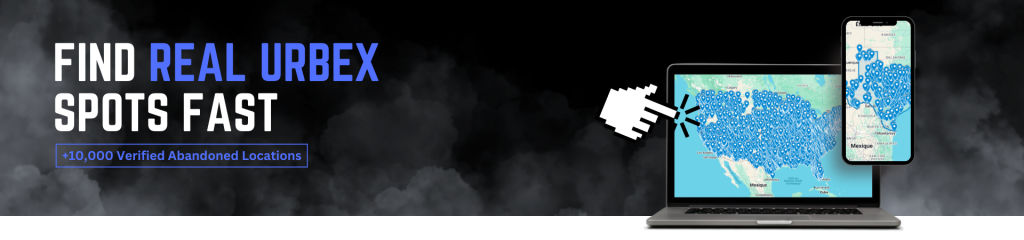
As urban exploration grows internationally, manually researching abandoned places becomes increasingly time-consuming. This is one reason why urbex maps and exploration databases have become central tools within the urbex community.
Instead of spending days searching forums or satellite maps, explorers can access organized collections of:
- abandoned factories,
- underground tunnels,
- military bunkers,
- abandoned hospitals,
- industrial ruins,
- forgotten mansions,
- and hidden urbex locations.
Modern urbex maps often include GPS coordinates, access difficulty, exploration notes, and compatibility with navigation tools such as Google Maps or OpenStreetMap.
On Urbex Obsession, explorers can discover thousands of urbex spots and abandoned places across multiple countries through dedicated urbex map collections designed specifically for urban exploration.
Hidden Urbex Spots Are Usually Better Than Viral Locations
One thing many beginners quickly discover is that the most famous abandoned places are not always the most interesting. Viral locations shared repeatedly on social media often become heavily vandalized, monitored, or overcrowded.
The best urbex experiences usually happen inside lesser-known places that still preserve their original atmosphere. A forgotten factory hidden deep in the countryside or an abandoned mansion untouched for years often creates a far more immersive exploration experience than locations already exposed everywhere online.
This is also why many urban explorers avoid publicly sharing exact urbex coordinates. Protecting abandoned locations helps preserve them from destruction, theft, and excessive exposure.
Communities dedicated to urban exploration generally value discretion because once a hidden urbex spot becomes viral, its condition often deteriorates very quickly.
Urban Exploration Requires Preparation
Even experienced explorers treat abandoned places carefully. Beneath the visual atmosphere and photography potential, many locations contain serious risks.
Collapsed floors, unstable ceilings, asbestos, flooded basements, broken staircases, mold, exposed metal, and hidden shafts are extremely common inside abandoned buildings. Old industrial sites can become especially dangerous because years of structural decay are not always visible immediately.
Proper preparation is therefore essential before visiting any urbex location. Most urban explorers carry:
- flashlights,
- gloves,
- backup batteries,
- masks,
- and reliable navigation tools.
Understanding local laws also matters because abandoned properties may still legally remain private property depending on the country or region.
For readers interested in the history and culture surrounding urban exploration, Wikipedia – Urban Exploration and National Geographic both provide useful insights into the global urbex phenomenon.
FAQ About Abandoned Buildings Near Me
What is the best way to find abandoned buildings near me ?
Most urban explorers combine satellite imagery, historical research, local information, and specialized urbex maps to discover abandoned places and hidden urbex spots.
What is an urbex map ?
An urbex map is a collection of abandoned locations and GPS coordinates designed for urban exploration and exploration planning.
Are abandoned buildings dangerous ?
Yes. Many abandoned structures contain unstable floors, asbestos, mold, broken glass, or hidden hazards caused by years of decay.
Why do explorers hide urbex locations ?
Many explorers protect hidden urbex spots to prevent vandalism, theft, and destruction caused by excessive online exposure.
Can I use Google Maps for urban exploration ?
Yes. Many explorers use Google Maps and satellite tools alongside dedicated urbex maps to navigate abandoned places.
Final Thoughts
Urban exploration is often less about entering abandoned buildings and more about discovering places forgotten by time. From industrial ruins and underground tunnels to abandoned hospitals and hidden mansions, every urbex spot tells a different story shaped by history, decay, and abandonment.
Finding authentic abandoned places near you usually requires patience, research, and the right exploration tools. With reliable urbex maps, satellite research, and a strong understanding of urban exploration culture, discovering hidden locations becomes far more accessible while helping preserve the spirit of urbex itself.
For more urbex guides, exploration resources, abandoned places, and international urbex map collections, visit Urbex Obsession.